
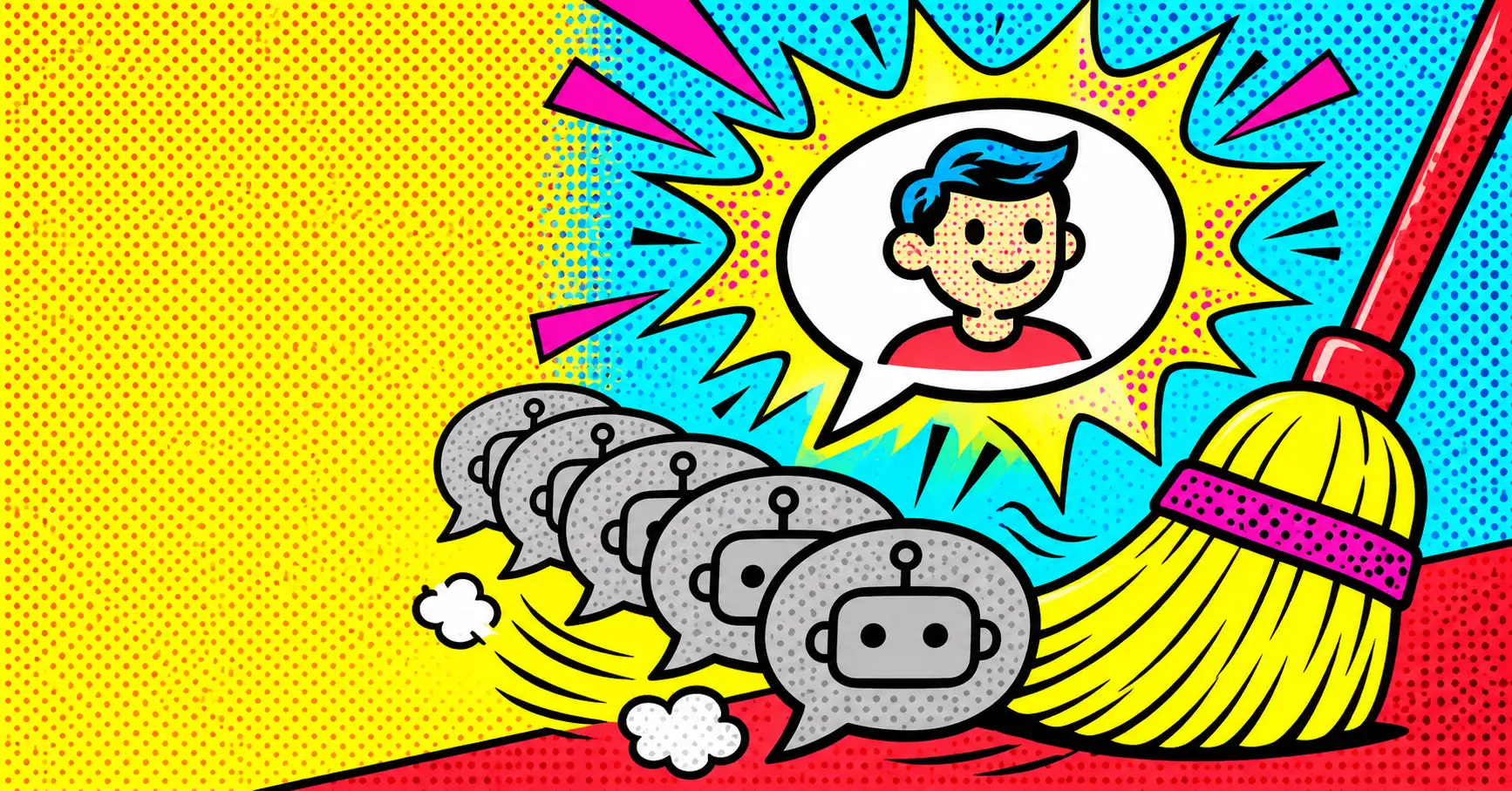
LinkedIn is pushing AI-generated comments down where fewer people will see them. If you or your team use ChatGPT or an automation tool to comment on posts, those comments are now likely to reach fewer people, and the person you’re commenting on may never be notified.
For business owners who use LinkedIn to stay visible to clients and referral partners, this changes what’s worth doing on the platform.
What has LinkedIn changed?
LinkedIn has added new classifiers that judge how relevant a comment is and flag suspected AI-generated comments as less valuable. Those comments are ranked lower under the default “Most relevant” sort. LinkedIn has also changed notifications so post authors are mostly alerted to comments they’re likely to care about.
The announcement came from LinkedIn’s Chief Product Officer, Hari Srinivasan, in a post reported by Social Media Today on 15 November 2026. He said that “in testing we’re already seeing a >20% reduction in views of slop comments”, and that the changes “will be rolled out to everyone soon”.
According to the reporting, the comments aren’t deleted and there’s no mention of penalties or account bans. It’s a ranking and notification change. The effect is that low-effort comments get seen less.
Why is LinkedIn doing this?
LinkedIn has been working against what it calls “AI slop” for most of 2026. Its view is that a feed full of generic, machine-written posts and comments makes the platform less useful, and people stop paying attention.
Earlier steps include:
- A “Seems like AI slop” button, added at the end of July, so members can flag posts that look AI-written. Social Media Today reports that more than a million people used it within about three weeks.
- Blocking automation. LinkedIn told TechCrunch it blocks hundreds of thousands of automated comment attempts every day.
- New classifiers to reduce slop in posts recommended from outside your network.
- Replacing its AI “enhance your post” writing tool with a proofreading feature.
Social Media Today also points out that AI chatbots increasingly cite user-vetted platforms like LinkedIn. That gives LinkedIn another reason to keep the quality of what’s posted there high.
How does LinkedIn know a comment was written by AI?
LinkedIn hasn’t said exactly how its classifiers work. What it has said is that they judge relevance and flag suspected AI comments. In practice, that means comments that could have been left on any post are the most likely to be pushed down.
You’ve seen the type. “Great insights, thanks for sharing!” “This is so important in today’s world.” “Absolutely agree, well said.” They add nothing, and they’re the easiest thing for an AI tool to produce in bulk. Whether a person or a tool wrote them, they now look the same to the algorithm.
What this means for your business
If LinkedIn is part of how you find clients, comments still matter. They’re one of the most direct ways to show up in front of people who aren’t yet connected to you. The change rewards comments that show you actually read the post and have something to add.
Here’s how we’d approach it:
- Stop using automated comment tools. If a tool posts comments on your behalf, switch it off. LinkedIn is actively working against them, and the risk to your reputation isn’t worth the small gain in activity.
- Write fewer, better comments. Three thoughtful comments a week on posts by clients, suppliers and people in your industry will do more than thirty generic ones.
- Add something specific. Share a related experience, a practical tip, a question or a polite counterpoint. A comment that only makes sense under that particular post is the kind LinkedIn wants to show.
- Use AI to think, not to write. If you use a tool to help you understand a topic or check your spelling, fine. Write the comment yourself, in your own words.
- Talk about your clients and your work. LinkedIn’s own B2B Institute research found that campaigns with strong buying signals were four times more likely to include customer testimonials. Real stories about real work tend to get attention, in posts and in comments.
The same thinking applies to your own posts. Members can report posts that look AI-written, and LinkedIn has said it will privately flag members whose writing seems inauthentic because of heavy AI use.
And as we’ve said before, it’s risky to build your marketing entirely on a platform whose rules change without warning. LinkedIn works best alongside a website you control. Our article on why relying only on Facebook or Instagram puts your business at risk applies just as much here, and so does why your business needs a website, not just social media.
Frequently asked questions
Does LinkedIn delete AI-generated comments?
No, not according to what LinkedIn has said so far. Suspected AI comments are ranked lower under the “Most relevant” sort, so fewer people see them. The post author may also not get a notification about them. The comments stay on the post.
Can I still use AI to help write my LinkedIn posts?
You can, but heavily AI-written content is what LinkedIn is targeting. Members can report posts as “Seems like AI slop”, and LinkedIn has said it will privately flag writing that seems inauthentic. Use AI for research or proofreading, and keep the writing and the opinions your own.
Will this affect my company page’s reach?
The comment changes affect how comments rank, not how posts rank. That said, LinkedIn has also added classifiers to reduce slop in recommended posts. If your page publishes generic content, it’s likely to be shown to fewer people outside your followers.
Is LinkedIn advertising affected?
LinkedIn hasn’t linked these changes to its ads. Paid campaigns run separately from organic comment ranking. If you want reach you can control and measure, paid social is the more predictable option.
Getting more from LinkedIn
If you’d like help with a social media plan that combines useful organic content with targeted paid campaigns on LinkedIn, Facebook and Instagram, have a look at our social media advertising and digital marketing services, or get in touch for a chat.
Recent articles.
FBI Warns Over 1,000 Hacked WordPress Sites Were Used to Spread Malware
ChatGPT Business Hub: How to Claim Your Business and What the Insights Show
Meta Ads Can Now Add Your Website Discounts to Facebook and Instagram Ads
WordPress 7.1.5 Security Release: What It Fixes and Why You Should Update Now
How to Add WhatsApp and Messenger Chat to Your Google Business Profile
View All Articles
